

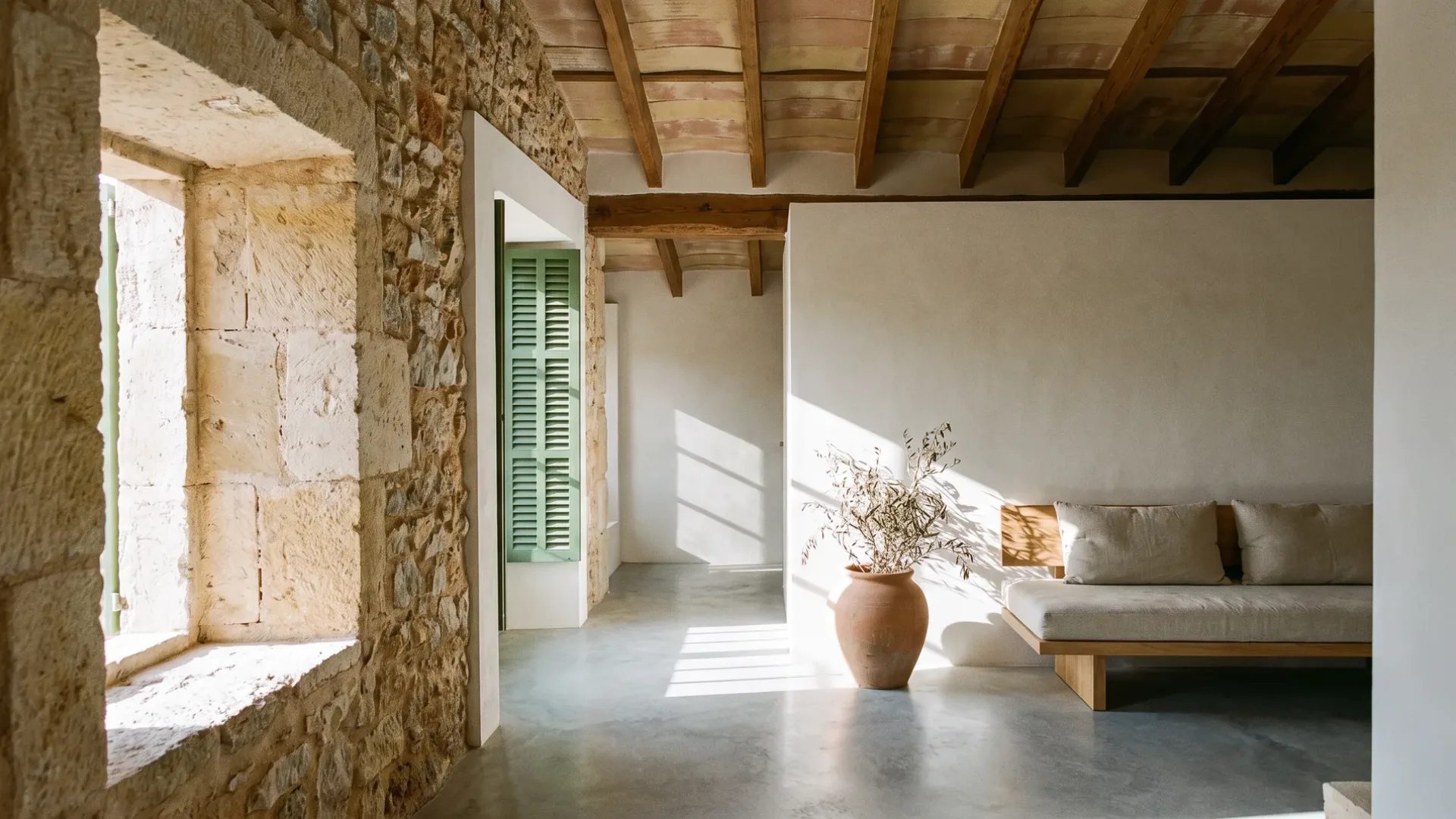
Mediterranean Modern Renovation in Mallorca
Keep the stone, the shutters and the thick walls, and put a calm contemporary interior inside them. It is the brief more owners arrive with than any other on this island, and almost all of the difficulty in it sits at one place: where the two halves touch.
Two halves with opposite tolerances
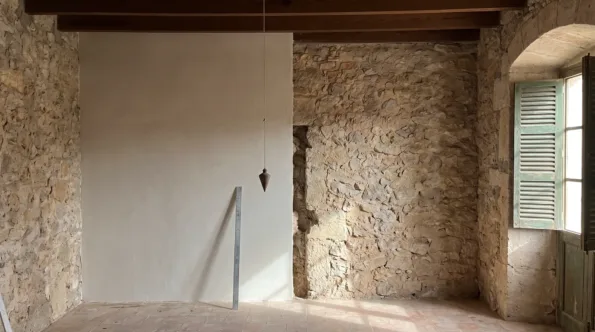
Old fabric is irregular because it was built by hand and has moved since. Walls lean, floors fall, openings are not square and nothing is the same width at both ends. Traditional detailing was designed around that: deep reveals, scribed timber and generous plaster all absorb the difference without anybody noticing.
Contemporary detailing does the opposite. A shadow gap, a flush threshold or a full-height door draws a dead straight line and invites the eye to run along it, which is exactly how a wall that falls fifteen millimetres over four metres announces itself. The two systems are not incompatible, but they cannot simply be laid on top of one another and hoped about.
So the whole craft of this style is the transition. Every place where new flush work meets old irregular fabric is a detail somebody has to design: either the new work stops short and is separated deliberately, or the old surface is made true first, which costs, or the junction is scribed on site by somebody good, which costs differently. There is no fourth option and pretending otherwise is what produces the wavy shadow gaps you see in photographs of finished projects.
The decisions this style is actually made of
- Which surfaces stay old and visibly old, decided room by room
- Which are made true, and what that does to the room dimensions
- How new joinery meets a wall that is not flat or plumb
- Whether new elements touch the old fabric or stand clear of it
- A shadow gap or reveal at the junction, used as a deliberate separation
- Floor levels, where an old building rarely offers one
- Where services run, given that the walls cannot always be chased
- Glazing into old openings: slim frames without losing the reveal depth
- Lighting that shows the stone rather than raking across the flat walls
- A material palette narrow enough to let the old fabric be the event
The rule that makes it work
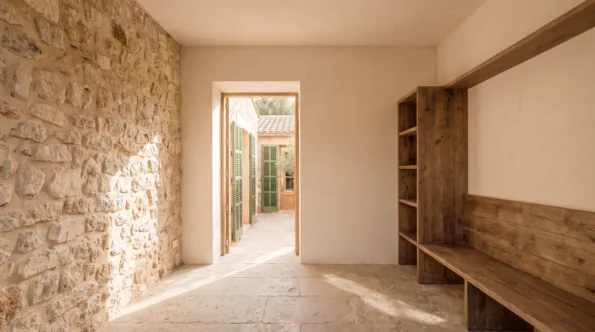
Let the new be frankly new. The versions of this style that succeed almost always keep a clear line between the two: the old fabric is left to be old, and the new work is unmistakably contemporary and does not pretend to have been there. The failures are the ones that blur it, where new plaster is textured to look aged and new timber is distressed, so neither half is convincing.
The second rule is restraint about how much old fabric is exposed. One stone wall in a room, with the others quiet, reads far stronger than four. It also solves a practical problem, because exposed stone and rough plaster hold dust and are awkward against flush joinery, and every additional exposed surface is another junction to detail.
The third is that this style rewards a survey more than any other here. How far a wall is out of plumb, how much the floors fall and where the structure actually sits all decide which of the three transition options you can afford. Those are measurements, not opinions, and they are cheap to take before the drawings rather than after.
Where the work happens
Structural work
Complete refurbishment
How your request reaches a company
Mallorca Renovation is a comparison service. A request for a Mediterranean modern renovation goes to the renovation and building companies on our list; they quote the work and carry it out, and any agreement is between you and the company you pick.
-
01
Describe the job
Tell us the property, roughly what you want and where it is. Photographs and a rough plan help, though neither is required.
-
02
We match it
The request goes to companies that work in your area and take on this kind of job at this size.
-
03
They quote you
Each company contacts you directly with its own price, timing and approach. We do not set any of it.
-
04
You compare and choose
Put the quotes side by side and take the one you want, or none of them. Using the site costs you nothing.
How much of the old building has to be made straight?
As little as you can accept, because straightening old fabric is slow and it eats room dimensions. The usual answer is to make true only the surfaces that new flush work has to meet, and to leave the rest alone and visible.
Can I have large glazing in an old stone opening?
Often yes, and it is structural work before it is glazing. The thing worth protecting is the depth of the reveal, since that is what shades the glass and what makes the opening read as belonging to the wall. A slim frame set deep behaves very differently from the same frame set flush.
Should new plaster match the old?
Usually not, and trying is where this style most often fails. Matching new work to old rarely convinces and it removes the contrast that makes the old fabric worth showing. A clean modern surface beside a genuinely old one flatters both.
Why is this harder than either style on its own?
Because every junction between them is a detail that has to be designed rather than assumed, and an old building has a great many junctions. On a uniform contemporary interior the details repeat; here they are close to unique, room by room.