

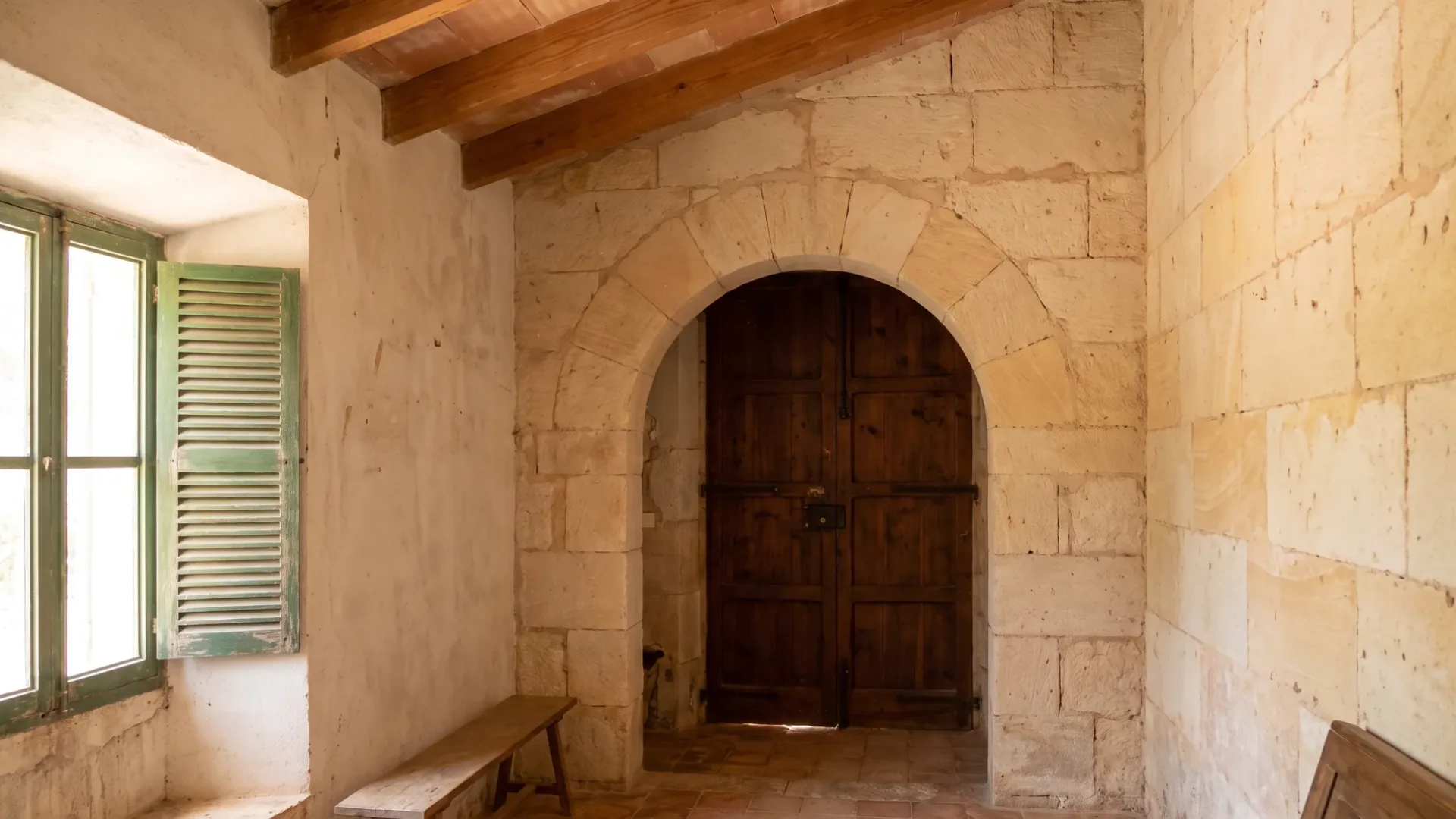
Traditional Mallorcan Renovation
Mallorca has its own building vocabulary, and it is narrower and more particular than the Mediterranean one. Sandstone cut from local quarries, lime rather than cement, vaulted ground floors, heavy carpentry and a small number of tile patterns that repeat across the island for a reason.
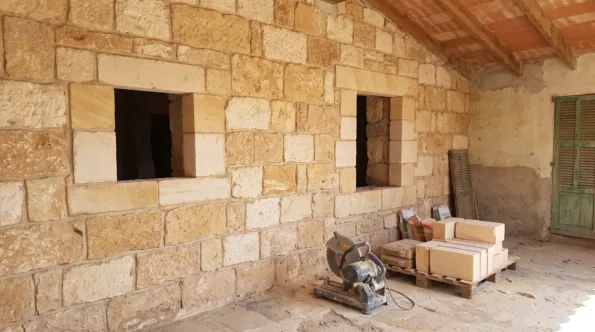
Knowing what you have is most of the job
The island sandstone is soft, warm in colour and cuts easily, which is why so much of Mallorca is built from it and why so much of it has been damaged by well meant repair. It weathers by shedding its face, and it is repaired by cutting back and piecing in rather than by filling. A hard cement patch on a soft stone wall does not fail at the patch; it pushes the failure to the stone beside it.
Lime behaves the same way and for the same reason. A traditional wall carries moisture through itself and lets it go at the surface, so the finish has to be more open than the wall, not less. Sealing it with a modern render or an impermeable paint traps the water, and the damage appears years later, higher up, in a place nobody connects to the repair.
Which means the first real decision on this kind of property is not aesthetic at all. It is whether the company doing the work knows the difference, and it is a fair question to ask directly, because the two approaches look identical for about three years.
The vocabulary itself
- Local sandstone, cut and coursed, repaired by piecing rather than filling
- Lime mortar, lime render and breathable limewash
- Vaulted or beamed ground-floor ceilings
- Heavy timber beams, often reused from an earlier building
- Timber shutters and grilles rather than internal blinds
- Hydraulic cement floor tiles in a small repeating set of patterns
- Terracotta and stone flooring elsewhere
- Deep sills, thick reveals and doors set back into the wall
- Ironmongery, hinges and nails as visible detail rather than hidden fixing
- Courtyards, cisterns and the stairs that were built around them
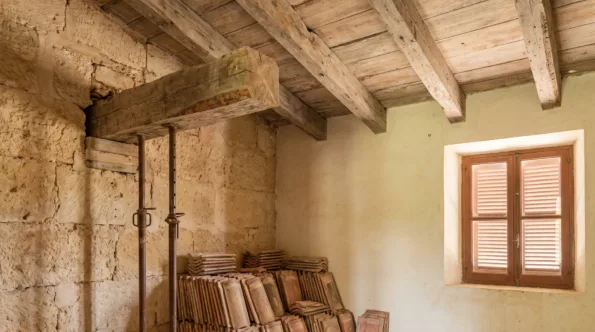
Repair, imitate, or replace
Three different projects and three different prices, and it is worth naming which one you are buying. Repair keeps the original fabric and costs skilled time. Imitation puts new material in the old language, which is faster and cheaper and, done honestly, perfectly respectable. Replacement takes the fabric out and puts something else in, which is sometimes the right answer and is very hard to reverse.
Most projects are a mix, and the mix is a decision rather than a discovery. Beams, sandstone surrounds, old tile and stone floors can usually be repaired, or lifted and relaid, but only if that is in the scope from the beginning. Once they have gone into a skip on day three the decision has been made for you by whoever was holding the hammer.
The other thing worth settling early is what happens where a repair is not possible. A house that is ninety per cent original and ten per cent honestly new usually reads better than one that is ninety per cent original and ten per cent pretending.
Where the work happens
General builders
How your request reaches a company
Mallorca Renovation is a comparison service. A request for a traditional Mallorcan renovation goes to the renovation and building companies on our list; they quote the work and carry it out, and any agreement is between you and the company you pick.
-
01
Describe the job
Tell us the property, roughly what you want and where it is. Photographs and a rough plan help, though neither is required.
-
02
We match it
The request goes to companies that work in your area and take on this kind of job at this size.
-
03
They quote you
Each company contacts you directly with its own price, timing and approach. We do not set any of it.
-
04
You compare and choose
Put the quotes side by side and take the one you want, or none of them. Using the site costs you nothing.
How do I know whether my render is lime or cement?
It is usually obvious to somebody who works with both, and much less obvious from a photograph. Cement is harder, greyer and tends to crack in straight lines; lime is softer, warmer and fails gradually. Ask at the survey, because it changes what the rest of the work should be.
Can I keep the old floor tiles?
Often yes, and they are worth keeping. Hydraulic tiles can be lifted, cleaned and relaid, and missing ones can be matched from salvage or made new. It has to be planned, because lifting them carefully is slow and lifting them quickly destroys them.
Are the old beams safe?
Sometimes, sometimes not, and it is not answerable from below. Timber can be sound at the centre and gone where it sits in the wall, which is exactly where the load is. It is assessed by somebody who opens up the bearing, and it belongs in the survey rather than in the hopes.
Is this style more expensive?
The materials are not unusual and the skill is. Repair in the original technique is slow work by people who can do it, and that is where the cost sits. Whether it is worth it depends on how much original fabric the property still has, which is worth establishing before deciding.