

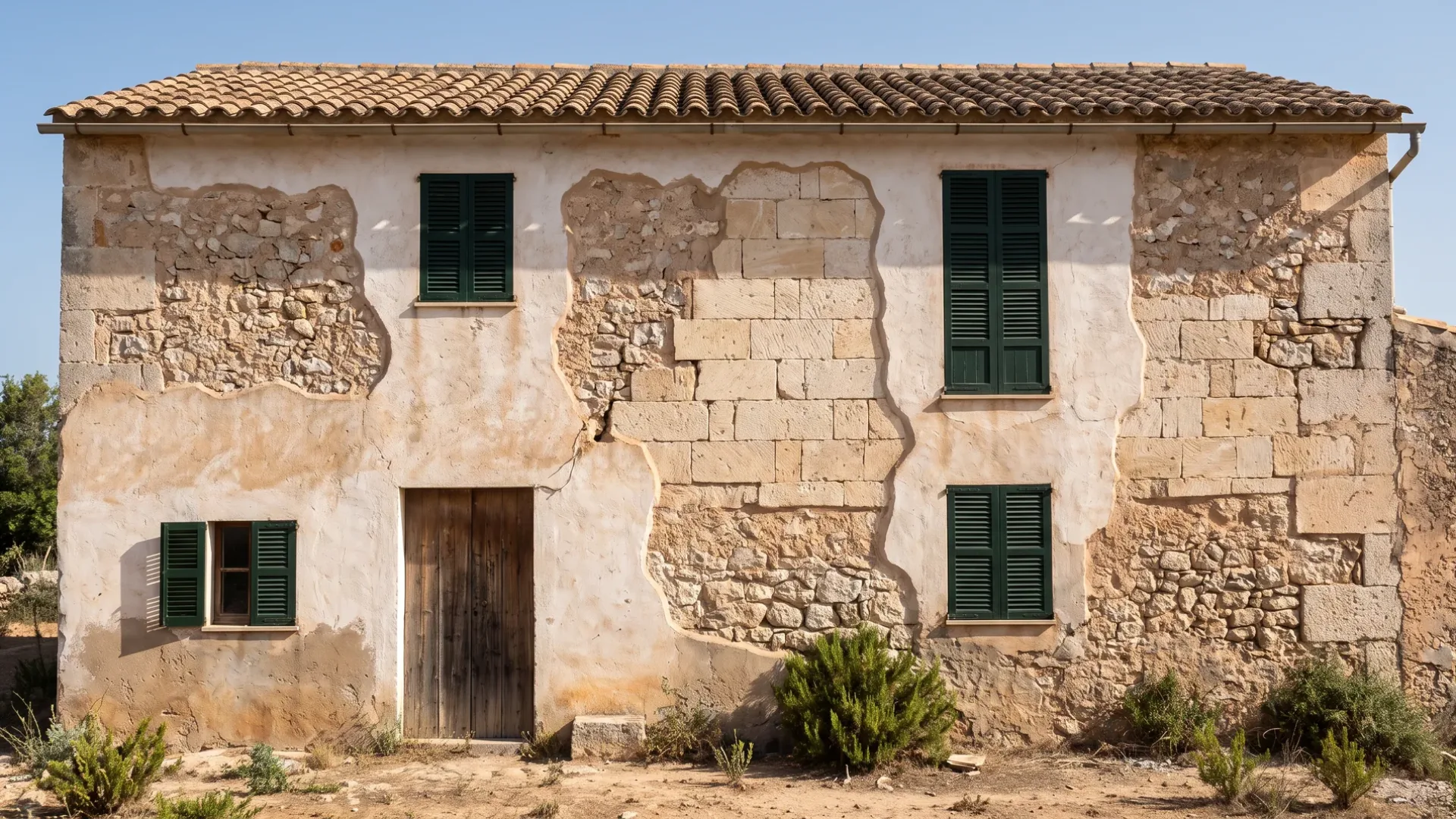
Facade Renovation in Mallorca
A facade is the part of a property that takes the weather, and on this island that means sun, salt and long dry spells broken by heavy rain. Describe the property and what you are seeing, and we pass the request to renovation and building companies on the island that take on that kind of work.
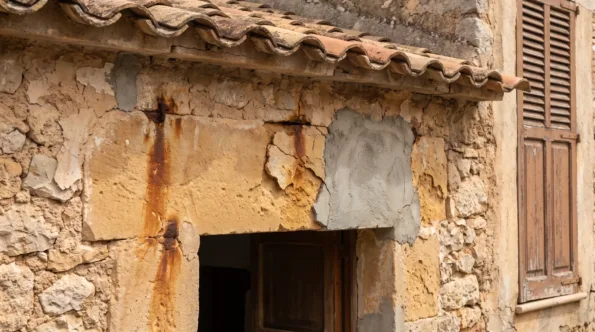
Reading a facade before repairing it
Most facade work is diagnosis first. Render that sounds hollow when tapped has lost its bond and will come off whether or not anybody removes it. A crack that runs diagonally from a corner is telling a different story from one that follows a mortar joint. Staining below a sill is usually water doing the same thing repeatedly rather than a mark that can be cleaned off.
The island adds two of its own. Salt carried inland by the wind reaches further than people expect and attacks embedded metalwork, so rust stains and spalling near a lintel or a balcony edge are common and are structural rather than cosmetic. And mares, the local sandstone, is soft and breathable, so a facade of it that was patched with a hard cement mortar will fail at the join every time, because the repair is stronger than the stone around it.
That is why a facade quote is worth having from somebody who has been up close to it. What can be seen from the street sets the question and not the scope, and the difference between a facade that needs painting and one that needs its render taken back is not visible from the ground.
What a facade request usually covers
- What the facade is built of, and what it was last finished with
- Cracking, and whether it follows the joints or crosses them
- Render or plaster that has lost its bond
- Rust staining and spalling around lintels, balconies and railings
- Mares and other soft stone, and what mortar it will accept
- Sills, copings and where water is being shed onto the wall
- Windows, shutters and the junctions around them
- Balconies and their waterproofing, where they form part of the elevation
- How the facade is reached, and what that does to the programme
- Whether the property is a single house or a building with shared elevations
How facade work usually runs
The order is dictated by what has to dry and what has to be reached.
-
01
Survey
Someone looks at the elevation at close range rather than from the street, and establishes what is loose, what is moving and what is only dirty.
-
02
Cause before repair
Where water is getting in, that is traced first. Repairing a symptom on a facade means repairing it again.
-
03
Access agreed
How the elevation is reached shapes both the price and the calendar, and it is settled before dates are fixed.
-
04
Removal
Failed render, loose material and previous repairs that are not holding come off.
-
05
Structural repairs
Corroded metalwork treated or replaced, cracks addressed according to what is causing them, stone made good with a mortar it will accept.
-
06
Rebuild and finish
Render or pointing rebuilt in compatible layers, then the finish, applied in conditions it will cure in.
-
07
Handover
Access removed, the ground made good, and a record of what was found behind the old surface.
Often part of the same project
Finca renovation
Property managers
How your request reaches a company
Mallorca Renovation is a comparison service. A request for facade work goes to the renovation and building companies on our list; they quote the work and carry it out, and any agreement is between you and the company you pick.
-
01
Describe the job
Tell us the property, roughly what you want and where it is. Photographs and a rough plan help, though neither is required.
-
02
We match it
The request goes to companies that work in your area and take on this kind of job at this size.
-
03
They quote you
Each company contacts you directly with its own price, timing and approach. We do not set any of it.
-
04
You compare and choose
Put the quotes side by side and take the one you want, or none of them. Using the site costs you nothing.
Does the whole facade have to be redone?
Not always. Where the render is sound over most of the elevation, failed areas can be cut out and rebuilt. Where it has lost its bond broadly, patching buys a short time and costs the same work twice. Tapping the surface across the elevation is how that gets decided, and it is a survey question rather than a photograph question.
Why does the same crack keep coming back?
Usually because the repair addressed the crack and not what is opening it, or because a hard mortar was used on a soft wall. Movement cracks reopen at the same line; a repair in cement on mares fails at the edge of the patch. Both look like bad workmanship and are usually the wrong diagnosis.
Is this painting, or is it building work?
It depends what is under the paint, and that is the point of the survey. A facade that is sound and dirty is a decorating job. One with hollow render, spalling around the metalwork or water tracking into the structure is building work with painting at the end of it. The two have very different prices, so the honest quote says which one it is pricing.
The facade belongs to the whole building, not to me. What then?
Then the decision belongs to the building rather than to one owner, and what a company needs is a description of the whole elevation rather than of one flat. Requests like that are welcome and are worth sending with whatever documentation the building already holds. See the page for property managers.
When is the best time of year for facade work?
It is driven by curing rather than by season alone. Renders and coatings need conditions to cure in, so very hot dry spells and heavy rain are both awkward, and a company will say what its materials need. Anything with a fixed handover date is worth booking well ahead of it.
Get comparable facade quotes
Describe the property and what you are seeing, and let several companies price the same brief.