

Renovation in Santanyí
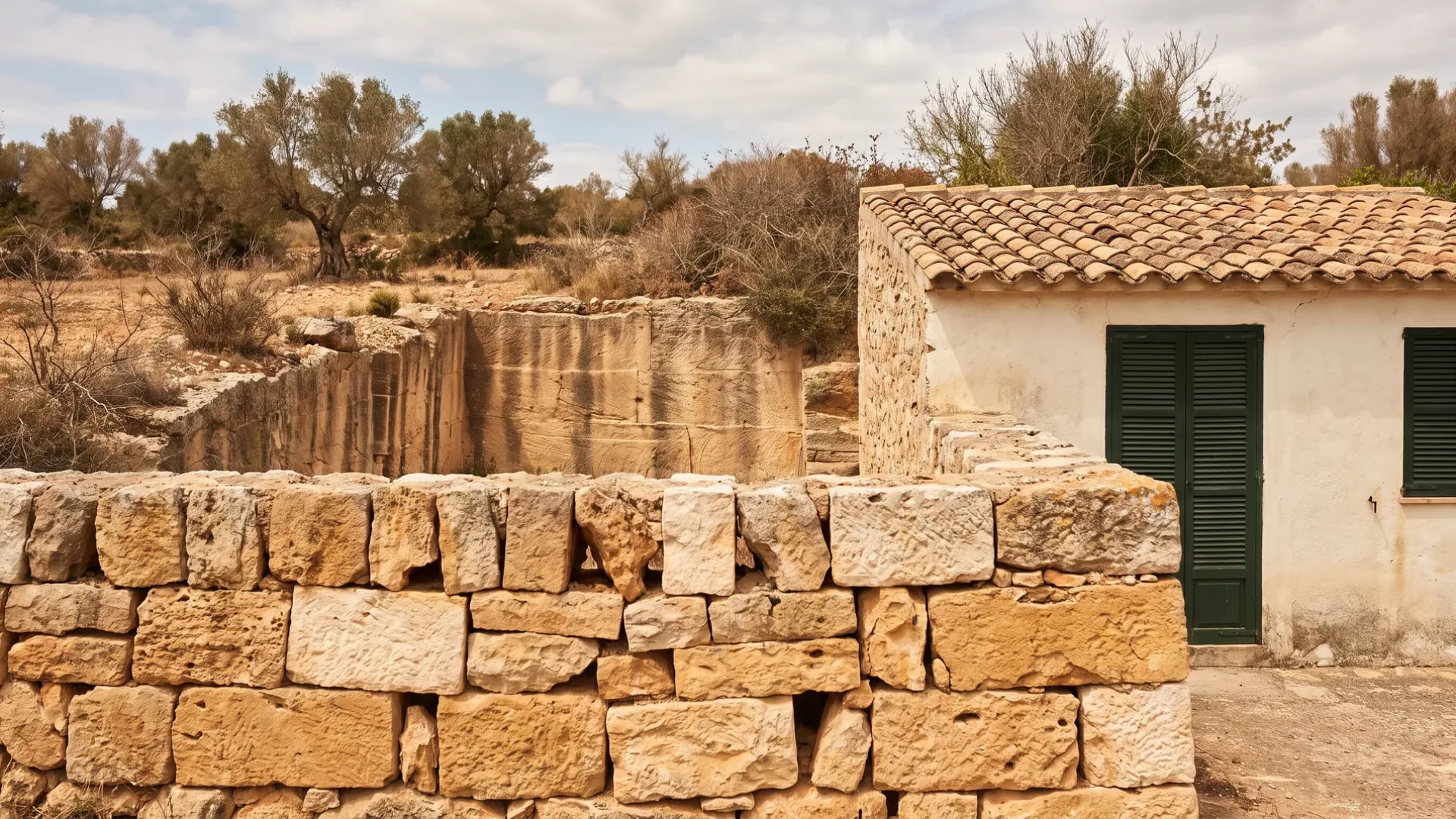
The warm golden sandstone that gives this part of the island its colour was quarried within a few kilometres of where it stands. It is in the walls, the surrounds, the lintels and the paving, and knowing how it behaves is most of what separates good work here from expensive damage.
Soft stone, and the repairs it will not accept
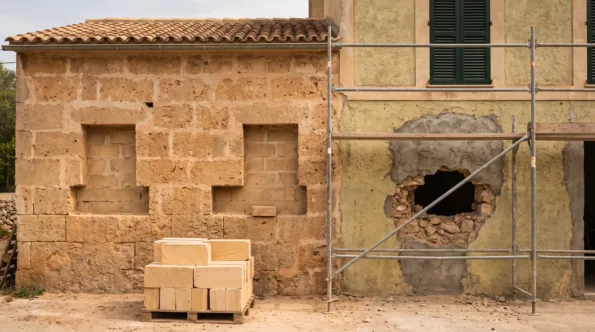
This sandstone is soft enough to cut with a hand saw, which is why so much was built from it and why so much of it has been ruined by kindness. It weathers by shedding its outer face, gradually and unevenly, and the correct repair is to cut the failed material back and piece in new stone that matches.
What it will not accept is a hard filler. Cement patched onto a soft stone face does not fail at the patch; it stays put and pushes the failure into the softer stone beside it, so a small repair becomes a larger one two winters later and the second one is harder to do well. The same argument applies to sealants and to modern paints across a stone facade.
The good news is supply. Because the material is local, matching a colour and a bed is realistic here in a way it is not everywhere, and replacing a damaged surround or a run of coping is a normal job rather than a hunt. Ask any company quoting the work where it is sourcing stone from and how it intends to fix the failed faces.
What the local stone means for a project
- Failed faces cut back and pieced in, rather than filled
- Lime mortar and lime render, matched to the softness of the stone
- Window and door surrounds repaired or replaced in matching stone
- Copings, steps and paving in the same material as the walls
- Cement patching from earlier repairs, often needing undoing
- Modern paint and sealant on stone, which traps what the wall carries
- Salt and wind on the exposed side of a building, which weathers faster
- New openings cut into stone, which is straightforward here and still structural
- Boundary and terrace walls, usually the same stone and the same failure
- Colour matching between old and new, which needs choosing in daylight
Most asked for around Santanyí
House renovation
Nearby areas
Felanitx and Portocolom
How your request reaches a company
Mallorca Renovation is a comparison service. A request for stone repair and renovation goes to the renovation and building companies on our list; they quote the work and carry it out, and any agreement is between you and the company you pick.
-
01
Describe the job
Tell us the property, roughly what you want and where it is. Photographs and a rough plan help, though neither is required.
-
02
We match it
The request goes to companies that work in your area and take on this kind of job at this size.
-
03
They quote you
Each company contacts you directly with its own price, timing and approach. We do not set any of it.
-
04
You compare and choose
Put the quotes side by side and take the one you want, or none of them. Using the site costs you nothing.
Can damaged stone be filled rather than replaced?
It can be, and on this stone it is usually the wrong answer. A hard filler on a soft face survives while the stone around it does not, so the repair outlives the wall it was meant to save. Piecing in matching stone costs more once and less over ten years.
Will new stone match the old?
Closely, and never exactly on the day it goes in. New material is lighter and weathers toward the surrounding colour over a few seasons. Choosing it in daylight against the actual wall gets much closer than choosing it in a yard.
Should a stone facade be sealed or painted?
Generally not, and it is worth asking before anybody suggests it. The wall moves moisture through itself, so a coating that closes the surface traps water inside the stone and the damage appears later somewhere else on the building.
Get quotes for stone and renovation work
Describe the property once and let several companies price the same repairs.