

Finca Renovation Guide
Key takeaways
- The largest line on a finca project is frequently not the building.
- Decide the restoration and modernisation split once, in writing, before pricing.
- A stone wall has to keep moving moisture, whatever is done to it.
- Access decides the pace, and no amount of planning removes it.
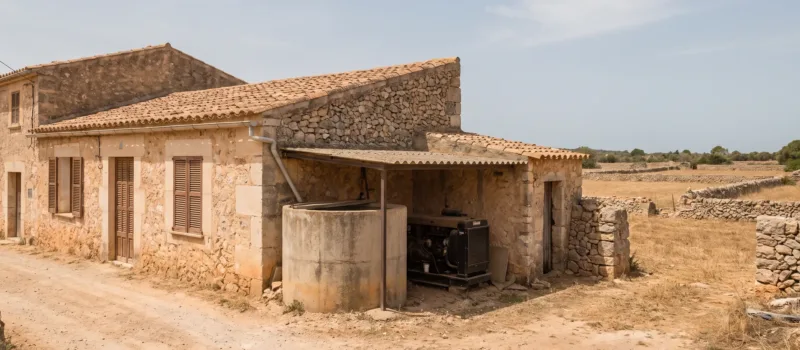
A finca is an old building in the countryside, and both halves of that decide the project. The fabric is stone and lime rather than block and cement, the services were added long after the house was built if they exist at all, and the site can be a long way from a mains connection of any kind.
One: read the building before designing anything
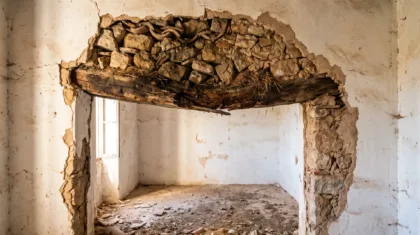
What is structural, what is original, what has already been repaired badly, and what the roof and the timber are actually doing. On a building of this age the drawings, if any exist, describe an intention. A survey here is not a formality, it is the thing that makes every later number real.
Two: decide what you are keeping
Restoration and modernisation pull in different directions. Restoration spends skilled time on what is already there: repointing in lime, piecing in stone, repairing beams, relaying a floor. Modernisation spends on what was never there: insulation, an electrical installation, water under pressure, drainage and cooling.
Almost every finca project does both, and the trouble starts when nobody has said which parts are which. A wall repaired in lime and then insulated internally in a way that stops the lime working is two reasonable decisions that cancel each other. Write the split down, element by element, before anybody prices it. The finca restoration page covers what the old fabric actually wants.
Three: price the site separately from the building
This is the step that distinguishes a finca from every other kind of renovation. Water supply and storage, electricity, waste treatment and a track a lorry cannot use are all normal on rural property, and any one of them can outweigh a kitchen. They are knowable early and they are the most commonly deferred part of the budget.
| Site item | What decides the cost | When to establish it |
|---|---|---|
| Water supply | Distance to a connection, or the source on the property | Before the building is priced |
| Storage and pressure | How the house will be used, not how it was | Before the building is priced |
| Electricity | Distance, and what the property will draw | Before the building is priced |
| Waste treatment | Whether anything exists, and what the house needs | Before the building is priced |
| Access | Width, surface, turning space at the end | Before anybody quotes at all |
Four: envelope before interior
Roof, walls, beams and openings, in that order, before anything inside is finished. On a building that has been open to the weather in places, getting it watertight and stable first is what stops the interior work being done twice.
Five: installations, then finishes
Electrical, plumbing and cooling, then plaster, floors, joinery, kitchen and bathrooms. The finishes on a stone building have to let the walls breathe, which rules out some materials that would be unremarkable elsewhere.
The outbuildings are not an afterthought
Stores, barns and animal buildings frequently convert more easily than the house does: simpler structure, no layout worth preserving, and nobody attached to how they were. Guest accommodation, a workshop or a summer kitchen usually sit better in one of those than carved out of a farmhouse plan. Have them surveyed at the same time rather than later.
What tends to cost more than expected
- Everything that is not the building: water, power, waste, access.
- Skilled repair in traditional technique, which is slow by people who can do it.
- Undoing earlier repairs done in cement on a wall built in lime.
- Roof structure, once the tiles are off and the timber is visible.
- Deliveries, because each one down a narrow track costs the same effort.
- Heating a thick stone building that has never been heated.
The finca renovation page covers what a request usually contains and routes to companies that price it.
Is restoring cheaper than modernising?
They are different jobs rather than two prices for one, so the comparison only means anything once the split is written down. Restoration spends on skilled labour, modernisation on new fabric and services, and the proportion is the biggest lever you have on the total.
Can a finca be insulated?
Usually, and the method matters more than the material, because the wall has to keep moving moisture. Anything that seals the inside face is the wrong answer whatever its performance figures say. Ask for the approach in writing.
What if there is no mains water or power?
Common, manageable, and it belongs in the budget from the start rather than at the end. Supply, storage, pressure and waste treatment amount to a project of their own alongside the building work.
Should the original layout be kept?
It depends how much survives and how the building will be used. A ground floor built for animals rarely makes good living space unchanged, and the upper floor often does. Deciding early stops a restoration turning into a rebuild halfway through.
This might be interesting to you
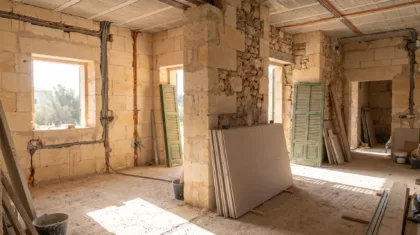
How Much Does It Cost to Renovate a Villa in Mallorca?
What actually moves the price of a villa renovation on the island, and why two quotes for the same h...
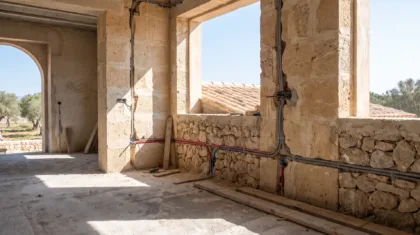
Villa Renovation Checklist for Mallorca
Everything worth settling before work starts, in the order it is needed, written to be worked throug...
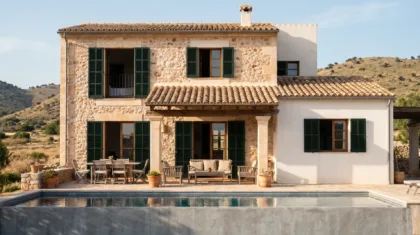
Turnkey Renovation Explained
The word is used loosely, and the gap between the loosest and the fullest version of it is most of w...
Common Problems When Renovating Older Property in Mallorca
What tends to be found once the walls are open on island property, what each discovery actually mean...