

A Complete Guide to Renovating a Property in Mallorca
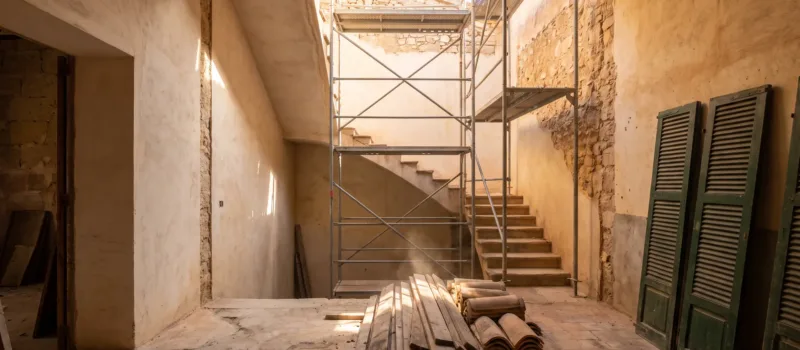
Key takeaways
- The order is not decorative. Work done out of sequence gets taken up again.
- Almost every expensive surprise is something that was assumed rather than established.
- The cheapest decisions are the earliest ones, and they are the ones people rush.
- A written scope is what turns several prices into a comparison.
Renovation on this island follows the same sequence whether the property is a flat in the capital, a villa on the coast or a farmhouse at the end of a track. What changes between them is which stage is hard, not which stages exist.
One: establish what you actually have
Before anything is designed, somebody works out what the building is: what is structural, what the services are, what has already been altered and what condition the roof and any timber are in. On property that has been renovated before this matters more rather than less, because previous work is rarely documented and is exactly what the next project will run into.
This is the stage people skip to save money and it is the stage that saves the most. An assumption made here is paid for at four or five times the price once walls are open.
Two: decide the scope, and write it down
The single biggest decision is whether the electrical and plumbing installations are being replaced, because that turns a project confined to a few rooms into one that touches every room. After that comes the layout, and whether it needs structural work to achieve.
Write the result down in plain language. It does not need to be technical. It needs to be the same document that goes to every company, because that is the only thing that makes their prices comparable.
Three: permissions and the technical side
What the work needs depends on what it touches and where the property is, and a company quoting the job says what it needs before it can price it. What matters practically is establishing early who arranges it and whether it sits inside the quoted price, because the answer varies between companies and it moves dates. There is a separate article on what to ask.
Four: strip out
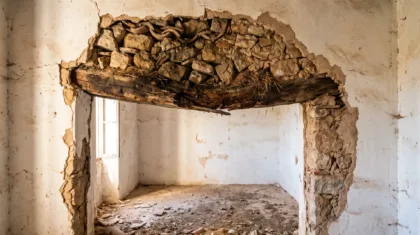
Demolition and removal, and the stage where the surprises appear: old wiring, damp with no obvious source, and structure that is not where anybody said it was. On a property with restricted access this is also slower and dearer than it looks, because waste leaves by whatever route material arrived.
Five: first fix
Structure, electrical, plumbing and any cooling routes, before anything is closed up. Every decision about socket positions, lighting, and where things go has to be made now, and changing them later means opening finished walls.
Six: second fix and finishes
Kitchen, bathrooms, flooring, plaster, paint and joinery. This is the visible part and the part everybody imagines when they picture a renovation, and by the time it starts the expensive decisions have all been taken.
Seven: handover
Snagging, the certificates the installations need, and the paperwork for anything that was permitted. Ask for a record of what is buried in the walls while somebody still remembers, because a house with no record of itself is much harder to maintain.
| Stage | What it decides | Cost of changing your mind later |
|---|---|---|
| Survey | Whether the rest of the numbers mean anything | Very high, and usually discovered mid-build |
| Scope | What every quote is pricing | High; changes after strip out undo paid work |
| Permissions | The programme more than the price | High, and measured in weeks rather than money |
| First fix | Everything about how the house works | High; finished walls have to come off |
| Finishes | How it looks | Low, which is why this is the enjoyable part |
Where to go from here
By property type: villa, house, apartment or finca. By where the property is, the areas pages say what differs locally. If you have not bought yet, price the work first.
How long does a full renovation take?
Months rather than weeks on anything substantial, and the permitting and the strip out usually take longer than people expect because that is when the unknowns surface. There is a separate article on timelines.
Can I live in the property during the work?
On a phased project sometimes. On a full renovation with the services replaced, generally not, and neighbours tend to prefer a short intense programme to a long quiet one.
Do I need an architect?
It depends on what the work touches, and a company quoting the job will say what it needs before it can price it. Ask early, because it affects the programme more than the price.
What is the most common expensive mistake?
Fixing the scope after the strip out rather than before it. Changes made at that point undo work that has already been paid for, and they move the date as well as the number.
This might be interesting to you
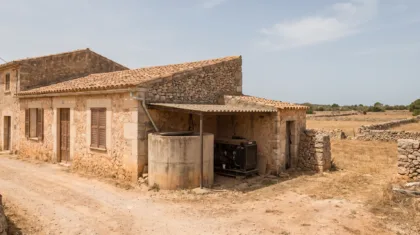
Finca Renovation Guide
How a finca project actually runs, and why water, power, waste and access are priced before anybody ...
Questions to Ask a Renovation Contractor in Mallorca
Fifteen questions worth asking before you agree anything, and what each answer actually tells you ab...
How Long Does a Renovation Take in Mallorca?
Where the time actually goes on an island renovation, and why most of the delay happens before anybo...
Common Problems When Renovating Older Property in Mallorca
What tends to be found once the walls are open on island property, what each discovery actually mean...